
How to Stay on Budget with Utility Steel Structure Projects
Steel structures offer strength, durability, and long-term value. However, one of the biggest...


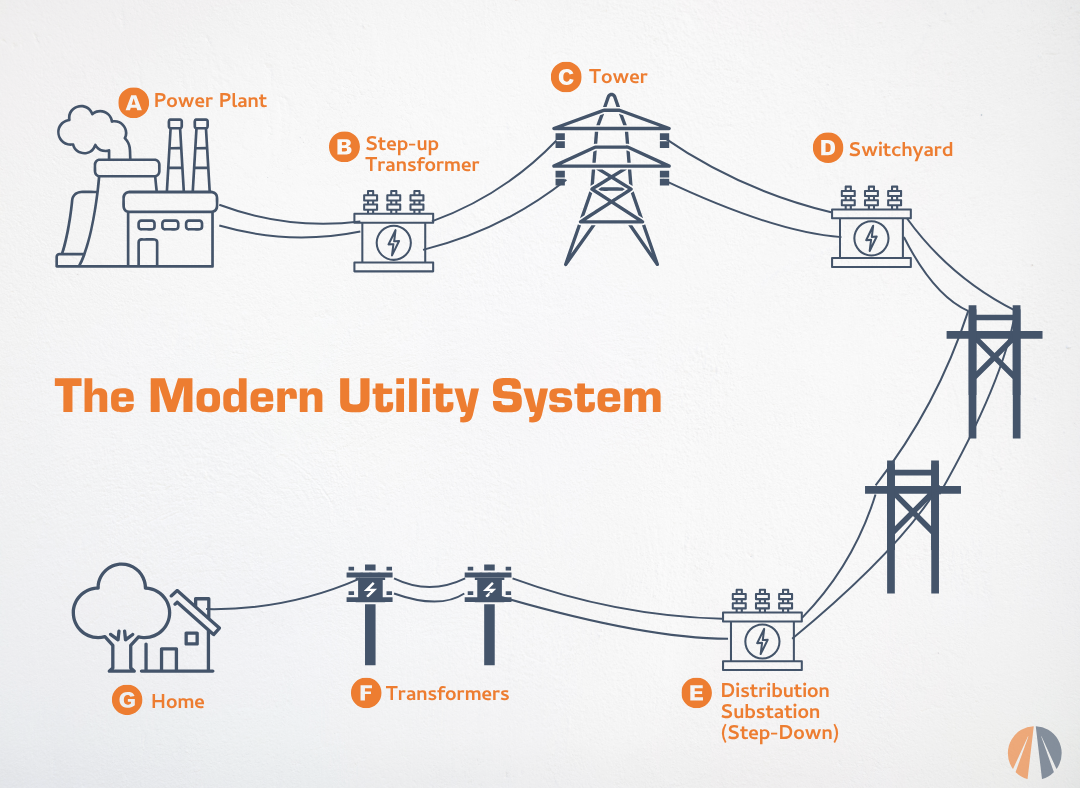
Ever wonder how electricity gets to your home? Electricity powers our world, but understanding its basic principles can be a challenge. This blog breaks down these concepts in a simple, relatable way.
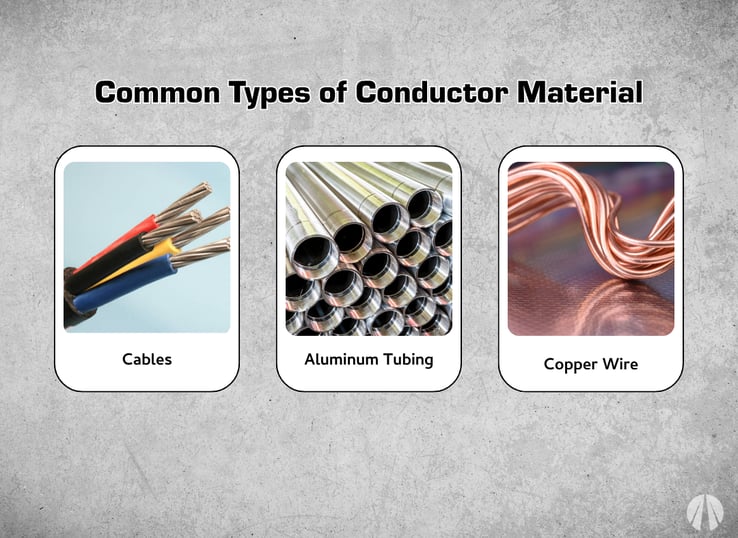
Electricity flows through paths known as circuits. These circuits can be single or double, each essentially providing a route for the flow of electricity. A circuit is composed of conductors, materials that facilitate the movement of charged particles. Conductors can take several forms, including cables, aluminum tubing, and copper wires. Each of these materials serves the fundamental purpose of moving electricity efficiently.
Voltage is a critical component in the world of electricity. It is the force that propels charged particles to move through a circuit. Think of voltage as the pressure that pushes electricity through the conductors. Without voltage, there would be no movement of electricity, much like water in a pipe without pressure.
Current refers to the actual movement of charged particles through a circuit. It is the flow of electricity driven by the voltage. While voltage is the pressure, current is the flow rate, the amount of electricity moving through the conductor at any given time.
Power in electrical terms is the product of voltage and current. It represents the rate at which electrical energy is consumed or converted into another form of energy. Simply put, power is what you get when you multiply the voltage by the current. This relationship is fundamental in understanding how electrical systems operate efficiently.
To simplify these concepts, let's use the analogy of a water hose*. Imagine the pressure of the water in the hose as the voltage. The size of the hose represents the current. When you decrease the size of the hose, the pressure increases, similar to how reducing the current increases the voltage in an electrical circuit. Conversely, increasing the size of the hose decreases the pressure.
*The water analogy is not perfect, but a useful analogy in understanding basic concepts in electricity.
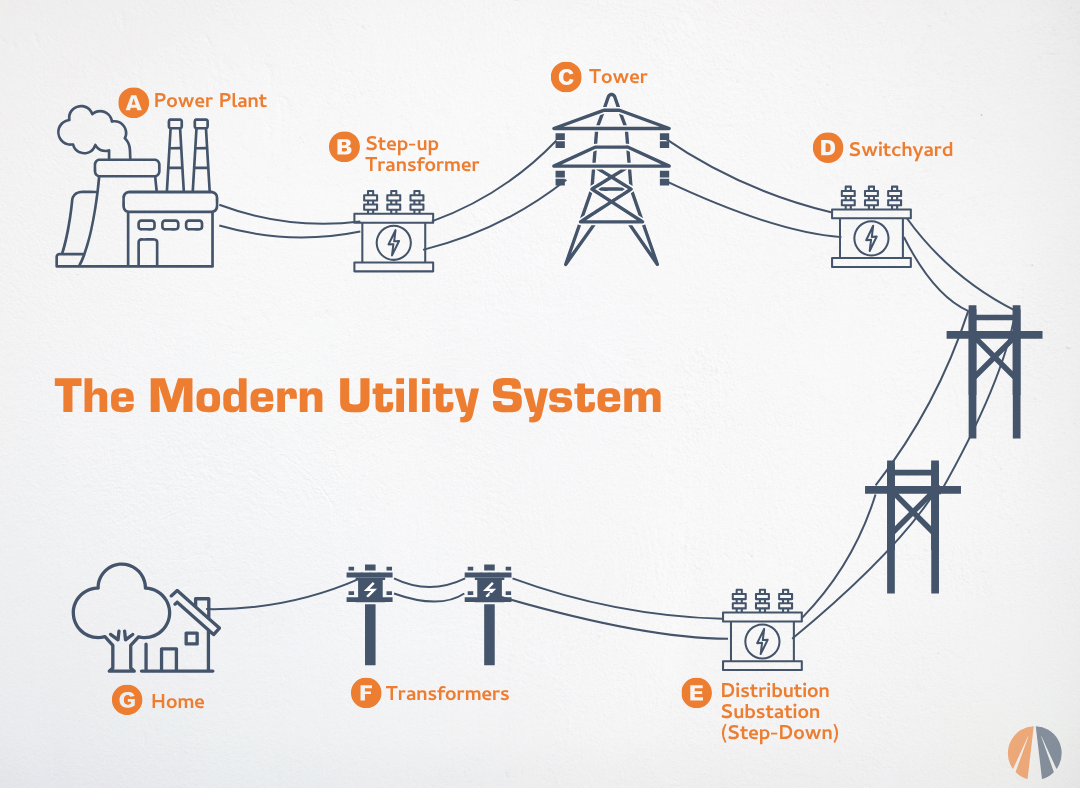
Now that you are more familiar with the terms, how does it all work together to power our homes?
1. Generation: It all starts at the power plant. These can be powered by fossil fuels (like coal or natural gas), nuclear energy, hydroelectric dams, wind turbines, or solar panels. The goal is to convert some form of energy into electrical energy.
2. Step-Up Transformer: Once electricity is generated, it goes through a step-up transformer. This device increases the voltage so the electricity can travel long distances efficiently through transmission lines.
3. Switchyard: At various points, electricity passes through switchyards. These act like traffic control centers, directing the flow of electricity to different regions and ensuring the system remains stable.
4. Transmission Lines: These are the high-voltage lines you see strung between tall towers. They carry electricity across cities, states, and even countries with minimal energy loss.
5. Step-Down Transformer: Before electricity can be used in homes, the voltage needs to be reduced. Step-down transformers lower the voltage to safer levels for local distribution.
6. Distribution Substation: Electricity enters a distribution substation, where it’s further routed and prepared for delivery to neighborhoods.
7. Distribution Lines: These are the smaller power lines you see on wooden poles along streets. They carry electricity to homes and businesses.
8. Service Transformer: Near your home, a final transformer (often mounted on a pole or in a green box) reduces the voltage one last time to the standard level used in household outlets.
9. Your Home: Finally, electricity enters your home through a service panel, where it’s distributed to outlets, lights, and appliances.
Understanding electricity doesn’t have to be complicated. By breaking it down into the basic concepts, we can understand how energy moves and powers the world around us.
Want to take it a step further and break down common utility structures? Download our free eBook to learn more.

Steel structures offer strength, durability, and long-term value. However, one of the biggest...
When partnering...
Transmission and substation structures can look straightforward at a glance. But the decisions...