
How Do Wind, Ice, Seismic, and Electrical Loads Affect Steel Utility Structure Design?
Wind, ice, seismic activity, wire tension, terrain, and electrical requirements can all influence...


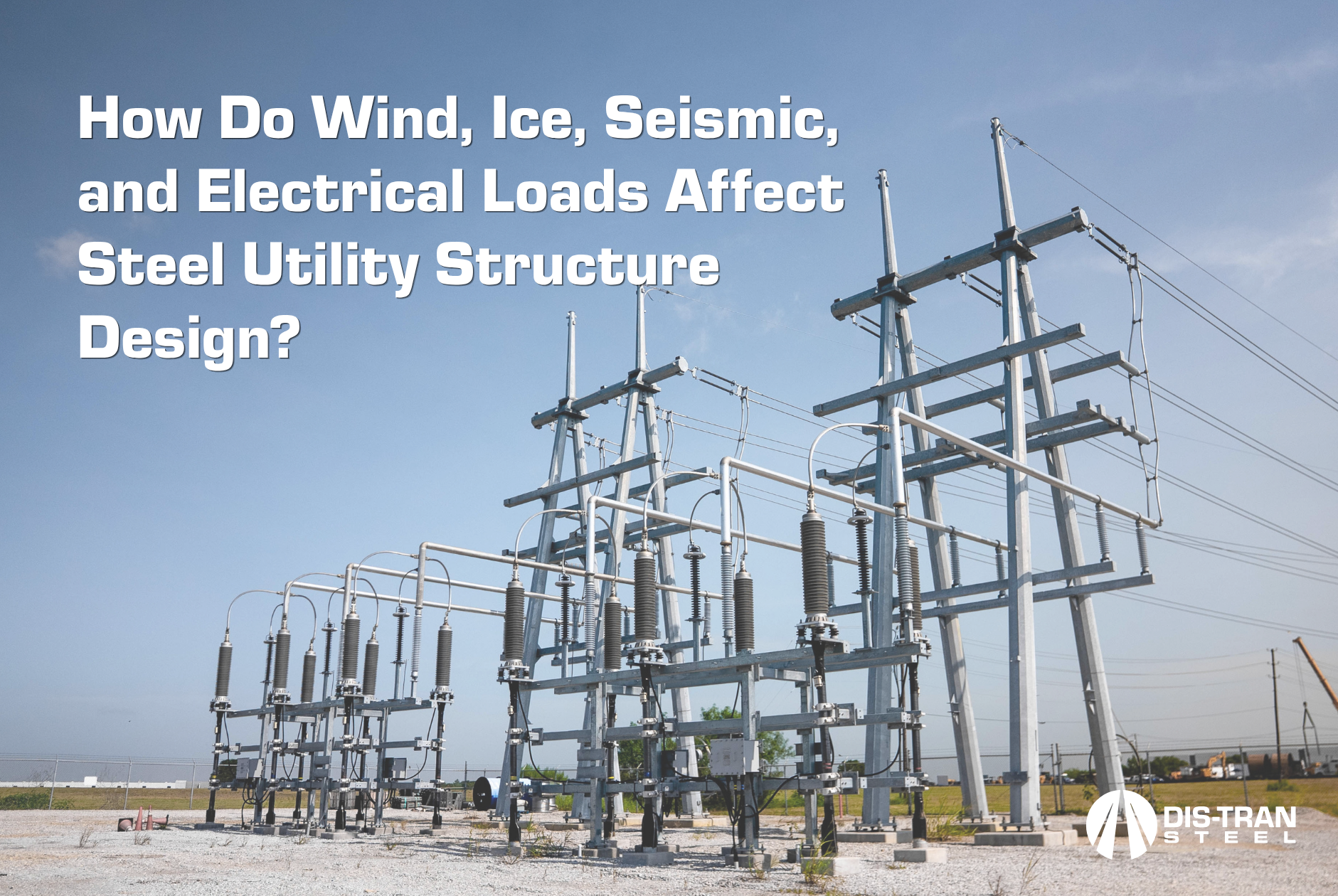
Wind, ice, seismic activity, wire tension, terrain, and electrical requirements can all influence the design of a steel utility structure. Which condition has the greatest impact depends on the structure, its location, and how it will be used.
A high wind speed may control one design, while heavy ice or equipment-related seismic forces may be more significant for another. Understanding these conditions early—and providing accurate loading information to the structure engineer—helps ensure the final design reflects the needs of the project.
Several conditions may need to be evaluated when designing transmission and substation steel structures, including:
There isn't one condition that controls every structure. Engineers have to consider both the individual conditions a structure may experience and how different loads are applied together.
Engineers use applicable design standards and load cases to determine which combinations of loads should be applied to a structure and the appropriate factors associated with them.
Those load combinations allow engineers to evaluate different conditions and determine which case controls the structure.
In general, extreme wind can be particularly significant in high-wind regions, while heavy ice can become a controlling factor in colder regions. Seismic forces may be more significant depending on the type of structure and what it supports.
Understanding how each of these conditions affects a structure helps explain why designs can vary significantly from one project to another.
Local wind speed can be one of the biggest factors affecting a steel utility structure. In coastal and other high-wind areas, increasing wind speeds can begin to control the design and require a more substantial structure.
Extreme wind isn't the only consideration. Engineers also have to be aware of the potential for wind-induced vibration, particularly in wide-open areas.
A relatively steady wind between approximately 15 and 30 miles per hour can induce vibration in certain structures. This can be a consideration for structures associated with wind or solar projects, where the surrounding area may be particularly open.
When that potential exists, engineers can evaluate characteristics such as taper, slenderness ratio, and the overall geometry of the structure to help determine whether it may be susceptible to wind-induced vibration.
Heavy ice loading can be a controlling factor in transmission structure design. The primary concern isn't necessarily ice building up on the steel structure itself—it's ice building up on the wires.
As ice accumulates, the wire becomes heavier and creates greater tension than it would under normal conditions. In areas where heavy ice is expected, those increased wire tensions can have a significant effect on the structure.
Engineers also need to consider the possibility of unbalanced ice loading, particularly on tangent structures.
On a tangent structure, the head and back loads generally balance each other. But ice may accumulate on one span and not another, or ice may build up on multiple spans and then shed from one before the other.
The result is an unbalanced tension that the structure may not otherwise experience.
When designing a tangent structure, if an unbalanced ice load case hasn't been provided, it may be necessary to confirm with the engineer responsible for the line design whether that condition needs to be considered.
The impact of seismic loading depends heavily on the type of structure.
For transmission structures with significant wire loads, seismic forces generally do not control the design because the forces created by the line tensions under other load cases are typically greater.
Substation equipment structures can be different.
Some substation structures support large, heavy pieces of equipment without experiencing the same high wire loads. During a seismic event, that equipment creates lateral forces related to its weight. As a result, seismic forces can become a controlling consideration for certain equipment support structures.
In other words, the significance of seismic loading depends on what the structure is supporting and how it is loaded.
Many electrical decisions are made by the line design engineer before the structure reaches the structural design stage. For example, the size and type of conductor are selected based on the electrical needs of the line.
From the structural side, engineers need to make sure the designed structure provides enough physical clearance for live electrical components.
While this is generally not an issue, the structure's geometry still needs to provide the necessary clearance between energized components and grounded portions of the structure.
Yes. Two structures serving a similar purpose can require different designs because of where and how they are installed.
One project provides a good example.
A tangent structure was placed on top of a hill in mountainous terrain. Its location allowed for very long ahead and back spans, and the area also experienced ice conditions.
When the design accounted for ice accumulating on those long spans, the wires became heavier and created a high axial load on the structure. The head and back spans largely balanced each other longitudinally, but their combined weight still had a significant effect on the structure.
That load changed a fundamental design decision. Rather than using the type of slip connection that would normally have been considered, a flange connection was used.
In this case, the terrain influenced the line layout, the layout influenced the span lengths, and the span lengths combined with the ice condition to affect the structure design.
Location can also influence wind exposure. A structure in a developed area may have more shielding from surrounding objects than one standing in a wide-open field.
Project conditions can also influence foundation decisions. Learn more about the differences between direct-embedded and drilled pier foundations for transmission poles.
Accounting for these project conditions depends heavily on the information provided to the structure engineer.
A clearly organized load table can be especially helpful. Ideally, it identifies the applicable load cases and attachment points and clearly shows which loads apply at each location.
Just as importantly, those loads need to make sense for the intended structure. When they don't, additional communication may be necessary to understand what the customer is trying to accomplish.
Wire tensions are particularly important because they are highly site-specific. They can depend on the span length, line configuration, and conditions surrounding the individual span.
Helpful project information can include:
Other information may sometimes be determined from equipment or project documentation, but wire tensions cannot simply be assumed.
For unusual configurations, additional visual information can also help. For example, a KMZ file showing the line design and structure locations can provide valuable context about what the structure is intended to do.
Clear information early in the process reduces back-and-forth communication and gives the structure engineer greater confidence that the design reflects what the customer actually needs.
There is no single environmental or loading condition that controls every steel utility structure.
Wind may drive a structure in a high-wind region. Heavy ice can increase wire tensions and become a controlling factor for transmission structures. Seismic forces may have a greater influence on substation structures supporting heavy equipment. Terrain and span configuration can further change how those conditions affect the design.
For that reason, utility structure design depends on understanding the complete project rather than evaluating any one condition in isolation.
Providing accurate load information, wire tensions, span information, and other project requirements early gives the structure engineer a clearer understanding of the conditions the structure needs to support—and helps the final design better reflect the needs of the project.


Wind, ice, seismic activity, wire tension, terrain, and electrical requirements can all influence...
Steel structures offer strength, durability, and long-term value. However, one of the biggest...
When partnering...